AI RFQ Analysis for Precision Manufacturing
An AI system that reads RFQ drawings — even decades-old hand-marked ones — pulls out every spec, flags what is ambiguous, and drafts the clarification email back to the customer. Minutes of senior-estimator work, done in seconds.
Real RFQ drawings the system handles — from clean CAD to decades-old hand-marked scans.
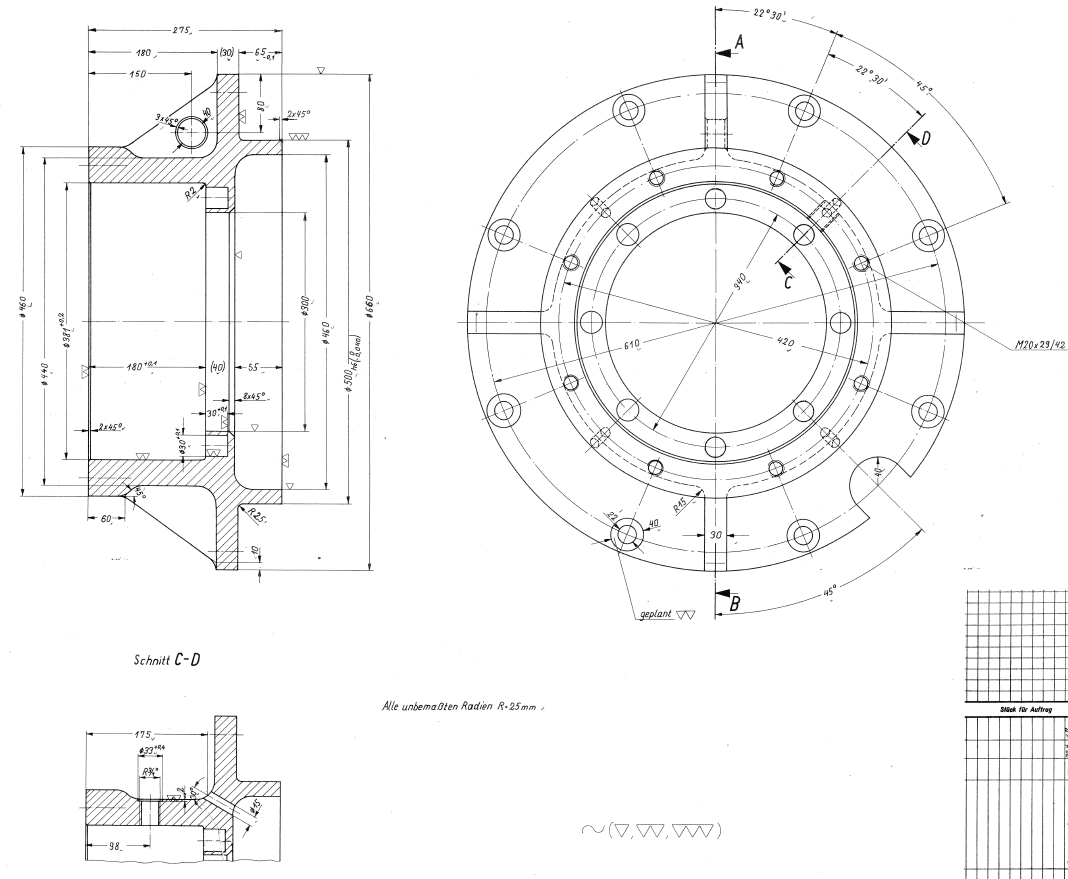
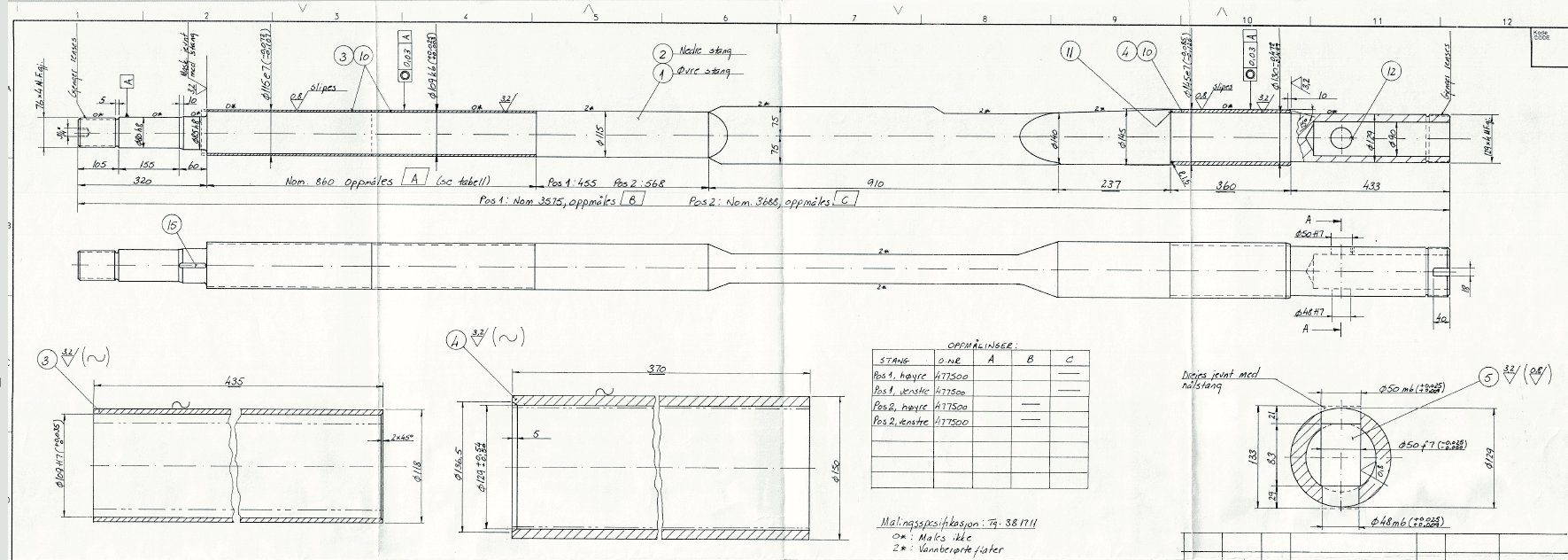
Every RFQ starts the same way: a senior estimator opens a customer drawing — often a scanned, hand-annotated sheet in German or Norwegian — and spends 30 to 60 minutes pulling out geometry, materials, tolerances, surface finishes and thread specs, then works out which details are missing or contradictory before anything can be quoted. Across hundreds of RFQs a year, that is hundreds of hours of the shop's most experienced people spent reading and transcribing instead of pricing and winning work.
We built a system that does the reading. Drop in a drawing — PDF or image, clean CAD or a 40-year-old hand-marked scan — and it returns the full specification in seconds, cross-references the customer's email, and flags exactly what a senior estimator would question: missing quantities, contradictory specs, obsolete standards. Where the drawing is ambiguous, it drafts the clarification email back to the customer — in their language, in the shop's voice.
How it works
- 01
Drawing extraction
Drop in a PDF or image. The system reads geometry, key dimensions, materials, tolerances, surface finishes, thread specs and bolt-hole patterns — handling everything from clean CAD output to decades-old hand-marked scans — and returns a structured specification in about thirty seconds.
- 02
Context from the RFQ email
The customer's email is parsed alongside the drawing: quantities, delivery dates, material preferences and special requirements, cross-referenced against what the drawing actually shows so nothing falls through the gap between the two.
- 03
Ambiguity detection
The system flags what a senior estimator would catch — missing quantities, contradictory specs, superseded standards, and the judgment calls that need a human — each one categorized by why it matters before it can block a quote.
- 04
Clarification email, drafted
Where the customer needs to answer a question, the system drafts the email for them — in the customer's own language and the shop's voice — ready to send with a light edit. On a real case, it independently surfaced the same three questions the estimator had already asked.
- 05
Quote assembly
Part details flow straight into the shop's own quote template — its layout, its branding — pre-filled from the extraction and ready for pricing and export.
Results
- Reads modern CAD and decades-old hand-marked drawings alike
- 30–60 minutes of estimator work per RFQ done in under a minute
- ~200 hours of senior-estimator time recovered per year, at around 250 RFQs
- Clarification questions and a draft reply generated automatically, in the customer's language
- Extracted specs flow straight into a ready-to-send quote
Tech stack
Next step
Where does AI actually
move your numbers?Where does AI
move your numbers?
15 minutes. No sales pitch. We look at your business and tell you honestly where AI helps, and where it does not.
Book a call